
Why Facebook Is Still a Smart Bet for Plastic Surgeons
Facebook often gets dismissed as a platform for older users. But for plastic surgery practices, that is actually the point.
Patients between the ages of 36 and 70 are among the most likely to pursue surgical procedures.
According to a 2024 Statista survey, 60% of plastic surgeons already use Facebook to market their services.
The audience is already there. The question is whether your ads do anything useful once they show up.
Facebook also offers genuinely precise targeting.
- Location
- Age
- Income level
- Life events
- Browsing behavior
All of this included within Ads Manager.
That level of specificity is hard to match with traditional media. It is one of the core reasons plastic surgery social media ads on Facebook outperform billboards and print placements for most practices.
One more number worth knowing: research from Boston University found that spending time on image-led platforms strongly correlated with a desire to undergo cosmetic procedures.
Most of them needed several touchpoints before reaching out. Facebook is built for exactly that kind of patient nurturing.
How Facebook Ads for Plastic Surgeons Are Structured
To run effective campaigns, you first need to understand how the platform is organized.
Facebook Ads Manager has three layers.
- The Campaign sets your objective, what you want the platform to optimize for.
- The Ad Set defines your audience and budget.
- The Ad is the creative itself. Each layer has a distinct job. ‘-
Skipping the structure means leaving performance on the table.
Avoid the “Boost Post” button.
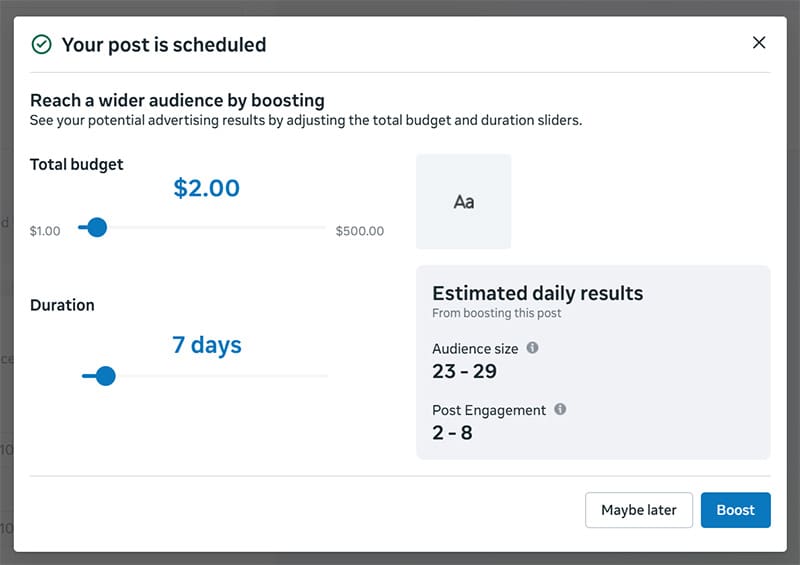
It delivers your content to a broad, poorly defined audience with minimal optimization. It is not a strategy.
Three campaign objectives worth knowing for plastic surgery practices:
- Lead Generation — Collects contact information inside Facebook without sending users to an external page. Works well for mobile users and quick first steps.
- Traffic — Sends users to a procedure page or educational post on your site. Best for warming up cold audiences.
- Conversion — Optimizes for booked consultations. Requires at least 50 conversion events before the algorithm performs reliably. This is a longer-term play and worth the patience.
The objective you choose shapes your cost, your audience delivery, and your results.
Matching the right objective to the right stage of the funnel is where most practices miss the mark.
How plastic surgeons advertise on Facebook often starts with this structural choice.
Targeting the Right Patient — Not Just Anyone in Your Zip Code
Broad targeting wastes budget fast. Start local. Most patients want a surgeon within 10 to 15 miles of home. Anchor your targeting there before layering in anything else.
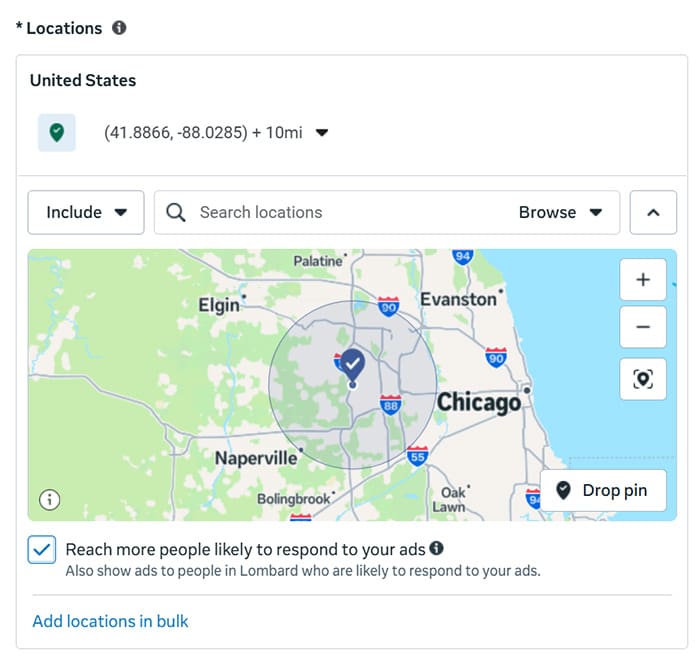
This is what “start local” looks like inside Ads Manager.
From there, narrow by demographics and procedure.
- Women aged 30 to 50 for mommy makeover or breast augmentation.
- Adults 45 to 65 for blepharoplasty or facelift consultations.
- Life event triggers like recent engagements or new parenthood signal high-intent audiences who are already thinking about appearance and confidence.
Retargeting is where your budget works hardest.
These are people who already visited your website, watched your videos, or engaged with your content.
They know who you are. A well-timed retargeting ad is often the final nudge that converts a browser into a booked consultation.
If you are not running retargeting campaigns, you are leaving warm leads untouched.
What Creative Plastic Surgery Ads Actually Look Like
This is where most practices trip up.
Facebook restricts before-and-after imagery directly in ads. Running a transformation photo as paid creative risks your ad getting rejected or your account flagged. Know this rule before you launch anything.
What Does Work for Creative Plastic Surgery Facebook Ads:
- Lifestyle imagery — confident, natural-looking people in everyday or professional settings. The goal is emotional aspiration, not clinical outcomes.
- Surgeon headshots and facility interiors — instantly signals credibility and professionalism.
- Short video ads (15 to 30 seconds) — show the patient experience from consultation to care. Video earns attention in the feed faster than any static image.
- Educational carousel ads — formats like “5 Questions to Ask Before a Rhinoplasty” or “What Recovery From a Tummy Tuck Actually Looks Like” perform well because they provide value before asking for anything.
Ad copy should lead with an emotional benefit, not a procedure list.
“Feel at home in your own skin again” lands differently than “We offer rhinoplasty, liposuction, and breast augmentation.”
State your board certification clearly and end with a specific, low-pressure CTA.
Always include the disclosures.
“Individual results may vary” and “Consultation required to determine candidacy.”
Compliance keeps your account healthy and signals professionalism to anyone reading the ad.
Keeping Your Facebook Page Ready to Convert
Every paid ad sends someone back to your Facebook page — either by direct click or by curious search after seeing the ad.
If the page looks inactive or thin, the ad loses its credibility immediately.
Knowing how to promote a plastic surgery Facebook page comes down to consistency.
- Post educational procedure content
- Surgeon Q&As
- Behind-the-scenes team introductions
- Patient journey videos — always with written patient consent.
Respond to every review and comment. An active, polished Facebook page is the trust layer that makes paid ads actually convert.
A pro tip: when an organic post performs well without any paid support, pay attention to it.
Strong engagement signals that the topic resonates with your audience.
Use that post as the foundation for your next paid campaign instead of starting from scratch.
The Metrics That Actually Matter
Impressions and likes are not business results. Measure by Cost Per Lead (CPL) and consultation bookings.
Healthy benchmarks:
- Aim for a 2 to 5% click-through rate
- 5 to 10% conversion rate on your landing page
- 3:1 return on ad spend is a reasonable baselinebut always factor in lifetime patient value.
A single rhinoplasty or facelift represents significant revenue. The math changes when you account for that.
One rule that gets ignored constantly: never send ad traffic to your homepage.
Build a dedicated, procedure-specific landing page for each campaign.
It is one of the highest-impact improvements a practice can make, and it costs almost nothing to implement.
Run A/B tests on one variable at a time — headline, image, CTA copy.
Let each test run for at least seven days and 100 clicks before drawing conclusions.
Watch your ad frequency.
When it climbs above three, creative fatigue sets in and your CPL rises. Refresh the ad before that happens.
When to Bring In Help
Some practices manage plastic surgery Facebook ads effectively in-house. Others burn through months of budget before realizing the structure was wrong from the start.
Signs it is time to bring in a specialist:
- Leads are inconsistent
- Cost per lead is climbing
- Your ad account has been flagged for compliance issues
- You have no clear attribution between your ad spend and actual consultation bookings.
A good marketing partner builds the campaign structure, manages ad compliance, runs ongoing creative tests, and reports on real results, not vanity metrics.
At Neur Digital, we work with plastic surgery practices to build full digital marketing strategies that support the entire patient journey — from the first scroll to the booked consultation.
Getting More Patients From Facebook Takes More Than a Budget
The plastic surgery Facebook ads that win are not the ones spending the most. They are the ones with the clearest message, the most precise targeting, and the patience to build trust across multiple touchpoints before asking for a booking.
Getting more plastic surgery patients from Facebook is a system problem — not a spending problem.
The structure, the creative, the landing page, the follow-up — each piece matters. When they work together, the results are measurable and repeatable.
If any part of this article prompted a question about your current setup, reach out. That conversation costs nothing.