

Myth #1: SEO Is Dead Because AI Has Replaced Google
This is the SEO myth for plastic surgeons we hear the most right now. It’s also the easiest to disprove.
Google still processes over 13.7 billion searches every single day worldwide. Search volume hasn’t shrunk because of AI. It’s grown.
AI tools changed how people see results. They didn’t change whether people search.
Strong plastic surgery SEO now helps your practice show up in classic search results and in AI-generated answers pulled from your site’s content.
If your content is thin or outdated, AI tools have nothing trustworthy to cite. That’s the real risk, not Google’s death.
Myth #2: Ranking #1 on Google Guarantees New Patients
Ranking high gets you seen. It doesn’t get you booked.
A patient researching rhinoplasty doesn’t stop at the first result.
- They check your before-and-after gallery.
- They reads reviews.
- They look for a clear way to schedule a consult.
Conversion depends on trust signals stacked on top of rankings: real patient photos, fast page load times, genuine reviews, and a call to action that doesn’t make her hunt for your phone number.
Rank #1 with a slow, confusing site and you’ll still lose her to the practice ranked #3 with a better experience.
Myth #3: Google Ads Make SEO Unnecessary
Paid ads work. Until the budget runs dry.
The moment you pause a Google Ads campaign, your visibility disappears with it. SEO builds equity that stays in place even when spend slows down.
Practices that invest in both typically see lower patient acquisition costs over time, since organic traffic doesn’t carry a cost-per-click.
Our medical device SEO case study shows how organic visibility compounds in ways paid media simply can’t replicate.
Ads and SEO aren’t competitors. They’re teammates working different timelines.
Myth #4: More Keywords Mean Better Rankings
Keyword stuffing used to work. It hasn’t worked in years.
Cramming “best rhinoplasty surgeon” into every other sentence reads as spam to Google and to patients. Modern algorithms reward content that actually answers a patient’s question.
Write for the person searching, not the algorithm.
Use your focus keyword naturally, then let helpful, specific information carry the page.
Myth #5: Once SEO Is Finished, You Don’t Have to Touch It Again
SEO isn’t a project with a finish line. It’s ongoing maintenance, like equipment servicing in your OR.
Search algorithms update constantly. Competitors publish new content. Technical issues creep in over time.
Practices that treat SEO as a one-and-done task watch their rankings slide within months. The ones that keep refreshing content, fixing technical issues, and building links hold their position and keep growing it.
Myth #6: Plastic Surgery Is Too Competitive to Rank Locally
Competitive, yes. Impossible, no.
Broad national keywords like “breast augmentation” are brutal to rank for.
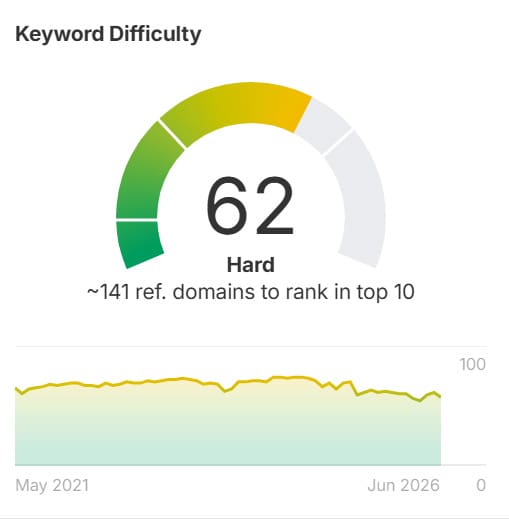
A broad keyword like breast augmentation, has a difficulty rating of 62/100 and would need around 141 backlinks to rank on the first page.
Procedure-specific, local-intent searches are a different story.
Terms like “tummy tuck recovery time Chicago” or “best facelift surgeon near me” carry far less competition and much higher patient intent.
Reviews matter heavily here too.
Local Google Business Profile signals and review activity directly influence local pack rankings, BrightLocal, 2026.
Targeting these specific searches is how smaller practices outrank bigger names in their own backyard.
Myth #7: A Beautiful Website Is Enough for SEO
A gorgeous website matters for first impressions. It’s not the same thing as SEO.
Google evaluates:
- Page speed
- Mobile usability
- Internal linking
- Technical health
None of which a designer’s eye can fix alone.
A slow site with stunning photography still loses to a faster, well-structured competitor.
Design earns the click. Technical health and content quality earn the ranking.
Myth #8: Online Reviews Don’t Impact SEO
Reviews are one of the strongest local ranking signals available, accounting for roughly 16% – 20% of local pack ranking weight, according to BrightLocal.
Beyond rankings, reviews shape whether patients click through to your site at all. A practice with 150 strong reviews will consistently out-click one with twelve, even from the same search position.
Review generation isn’t a side project. It’s core SEO work.
Myth #9: AI Can Write All of Your SEO Content Without Human Input
AI drafts fast. It doesn’t know your technique, your patient philosophy, or what actually sets your practice apart.
Medical content carries real stakes.
Inaccurate claims about recovery timelines or procedure risks can mislead patients and damage trust.
Use AI as a starting point if you’d like.
Successful plastic surgery SEO still requires a surgeon’s expertise, original insight, careful fact-checking, and a voice that sounds like your practice instead of every other practice using the same tool.
Myth #10: Before-and-After Photos Alone Will Rank Your Website
Galleries are powerful. Patients trust what they can see.
But search engines can’t interpret a photo the way a patient can. They need:
- Optimized text
- Descriptive alt tags
- Structured metadata
- Supporting content explaining the procedure, recovery, and candidacy
Pair every gallery with a well-written procedure page. The photos build patient trust. The text builds search visibility.
The Bottom Line on Plastic Surgery SEO
SEO myths for plastic surgeons spread because they sound plausible.
The truth is less flashy but far more reliable: SEO still works, it just requires consistency, accuracy, and patience.
If you’re not sure which of these myths have shaped your current strategy, that’s worth a closer look.
Our team has worked through these exact challenges.
Have questions about your practice’s SEO? Reach out to our team for a conversation.