

What Google Search Console Actually Tells You (And Why Most Practices Ignore It)
Google Search Console is free.
It’s not Google Analytics, and that trips people up constantly.
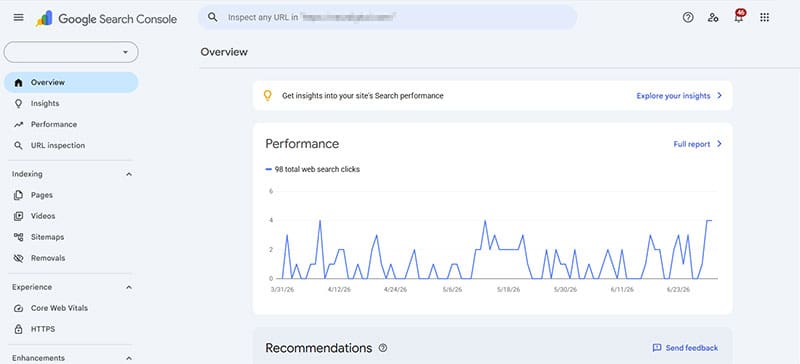
Google Search Console home page screenshot.
Analytics tells you what happened after someone landed on your site. GSC tells you how Google found you in the first place, and whether it even wants to show your pages to searchers.
Most practices skip it because it looks technical.
Rows of query data. Charts with unfamiliar labels. I get why it’s intimidating.
But it’s the closest thing you have to Google telling you the truth about your website. Ignoring it means flying blind on plastic surgery SEO.
That matters more than ever right now.
A 2026 lead generation report from First Page Sage, based on an analysis of 58 U.S. plastic surgery clinics, found that SEO is the highest-converting digital channel in the industry, outperforming paid ads and social media for turning visitors into consultations.
The First Thing I Check: The Performance Report
Every week, I start in the same place. The Queries tab under Performance.

I’m hunting for one specific pattern.
Keywords already ranking between positions 8 and 20, with decent impressions. Those are page-two rankings. They’re close. A little more content or a few internal links can push them onto page one.
This is exactly where content marketing for plastic surgeons should start.
Not with a random list of blog ideas. With proof that Google already sees your site as relevant for a topic, just not relevant enough yet.
This single report should be your first stop too.
Indexing: Where I Catch Problems Early
Rankings mean nothing if Google can’t index your pages.
I look for:
- Excluded pages
- Crawl errors
- Duplicate content flags
A mislabeled canonical tag or an accidental “noindex” setting can quietly erase a page from search results. Nobody notices until traffic drops.
A Quick Example
Let’s say a practice’s entire procedure page category gets excluded from Google’s index. An update had accidentally added a blanket noindex tag.
Traffic had been sliding for weeks and nobody knew why. One fix in the Indexing report and rankings recovered within a month.
That’s the kind of issue GSC catches that Analytics simply can’t.
Using GSC to Guide Content Marketing for Plastic Surgeons
Query data isn’t just for fixing rankings. I use it to build the actual content calendar.
If a blog post is getting impressions for informational searches like “recovery time” but almost none for procedure-specific terms, that tells me something.
The content is attracting research-stage readers, not ready-to-book ones.
Matching search intent to content type is where digital marketing for plastic surgeons actually earns its keep.
GSC shows you the intent. Your content strategy should respond to it.
Mobile Usability and Core Web Vitals: The Technical Side I Don’t Skip
This isn’t the exciting part of the job.

But most plastic surgery website traffic comes from mobile.
If pages load slowly or shift around while loading, patients bounce before they ever see your before-and-afters.
I don’t obsess over a perfect score. Chasing 100 out of 100 on every metric wastes time better spent on content. But ignoring this section entirely is a mistake.
Slow, clunky mobile pages quietly undercut every other SEO effort you’re making.
Why I Check GSC Weekly, Not Just Monthly
Most agencies glance at Search Console once a month during reporting. I don’t think that’s often enough.
Indexing issues can appear within days. A single site update can accidentally block a whole page category. Waiting 30 days to notice means 30 days of lost visibility.
Checking weekly costs me maybe fifteen minutes.
It’s saved clients from indexing disasters more than once. That single habit is a big part of how we approach SEO across our client accounts, and it shows in the results. Our medical device marketing case study breaks down what that consistency looks like over time.
Conclusion
Google Search Console for plastic surgery practices isn’t optional if you’re serious about growing organic visibility.
It’s free, it’s direct from Google, and it tells you things no other tool will.
- Start with the Performance report.
- Check Coverage regularly.
- Don’t ignore mobile usability.
- And check it more often than you think you need to.
If you’d rather have someone else handle the weekly digging, that’s exactly what we do for clients every day.
Feel free to reach out with questions or book a call to talk through your practice’s current SEO setup.