

Why Email Lists Still Matter for Plastic Surgery Practices
Social platforms come and go.
Algorithms change overnight.
Your email list is the one audience you fully own.
Plastic surgery decisions rarely happen in one visit. Patients research for weeks or months before booking a consult. Email keeps you in front of them the entire time.
It also drives repeat business.
Injectables, skincare, and follow-up procedures depend on staying top of mind.
Healthcare email campaigns average a 41% open rate, well above most other marketing channels. That is a lot of inboxes ready to hear from you.
Audit What You Already Have
Before chasing new subscribers, check what is sitting in your systems.
Your EHR likely has thousands of patient emails collected for appointment reminders. Most were never asked to opt into marketing.
- Pull a report of patient emails without a marketing consent flag
- Review your website forms. Are they capturing emails, or just phone numbers?
- Check financing and consult-request forms for missed opt-in fields
A quick audit often reveals hundreds of contacts you can legally invite to subscribe.
On-Site Lead Capture Methods
Your website is your highest-traffic lead source. Make it work harder.
Lead Magnets
Offer something worth an email address. A recovery timeline guide, a procedure cost breakdown, or a before-and-after look book all work well.
Pop-Ups Done Right
Timing makes or breaks a pop-up. Never fire one the second a visitor lands on your site.
Nobody wants to give up their email before they have even seen a page load. That kind of pop-up does not build your list. It just sends people hunting for the close button.
Exit-intent pop-ups work better.
They catch visitors right as they are about to leave, after they have already seen what you offer. Keep the ask small and the offer specific.
One field, one clear benefit.
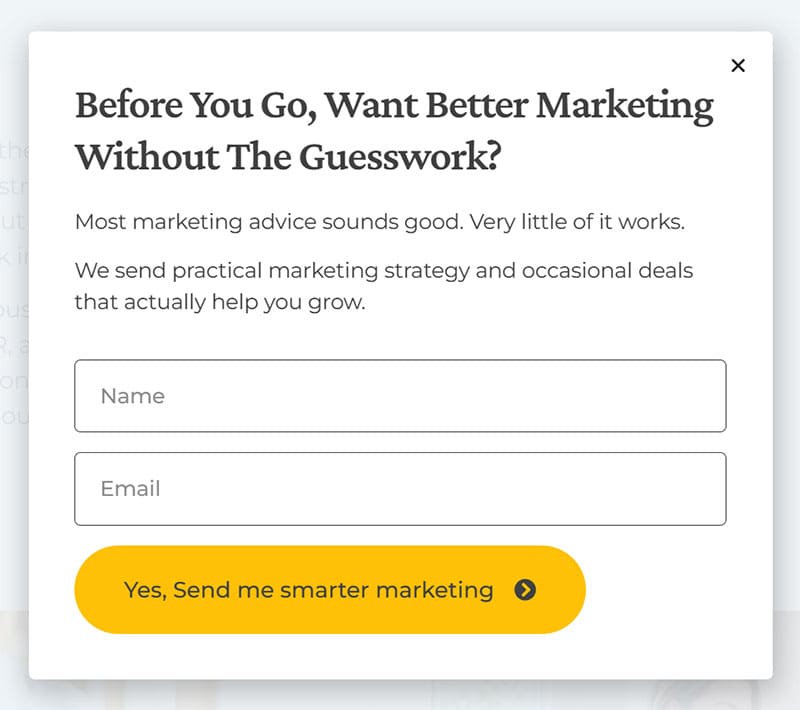
An example of our exit-intent popup.
Gated Guides
“What to Expect” PDFs for your top three procedures give visitors a reason to trade their email for real value.
A site built for conversion matters here too. Our website design and CRO work for plastic surgeons focuses on exactly this kind of lead capture.
In-Office and Consult-Based Collection
Your front desk collects more contact information than any web form ever will.
Make email capture part of every consult booking, not an afterthought. Ask for it the same way you ask for a phone number.
Post-op care is another natural opt-in point.
Patients expect follow-up communication after surgery. That is a perfect moment to confirm their email and ask permission for future updates.
Train your team on this.
A short script at check-in keeps capture consistent, whether it is a Monday morning or a packed Friday.
Events, Social, and Partnerships
Your list does not have to come only from your website.
- Open houses and VIP events: collect sign-ins digitally, not on paper you will lose
- Social lead ads: run a giveaway or free webinar on Instagram or Facebook tied to an email opt-in
- Referral partnerships: co-market with local dermatologists and medspas who see your ideal patient before you do
These channels also support your broader plastic surgery SEO and visibility efforts, since a bigger local footprint tends to feed both search rankings and list growth.
Incentives That Actually Work
A small nudge goes a long way. Right?
- Offer a discount on a first consult for signing up
- Enroll new subscribers in a loyalty or rewards program
- Run seasonal promos that require an email to unlock
Keep incentives modest. The goal is a qualified subscriber, not a bargain hunter who never books.
Compliance and Trust Basics
None of this works if patients do not trust how you handle their information.
Keep protected health information out of your email marketing platform unless you have a signed authorization and a HIPAA-compliant vendor.
Marketing emails that reference specific conditions or procedures tied to an individual can cross into PHI territory fast (HIPAA Journal, 2025).
Basic rules to follow:
- Get explicit opt-in consent before sending marketing emails
- Include a clear, working unsubscribe link on every send
- Never buy or scrape an email list
Compliance is not just about avoiding fines. It protects the trust that makes patients open your emails in the first place.
Turning the List Into Revenue
An email list for plastic surgery patients is only as good as what you do with it.
Segment early.
Group subscribers by procedure interest, consult stage, and existing patient status. A prospect researching rhinoplasty needs different content than a patient six weeks post-op.
This is where list building connects to email marketing for plastic surgeons as a whole.
The tactics above fill the funnel.
Strategy and segmentation are what turn that funnel into booked consults.
If you want a deeper look at building that strategy, our guide to digital marketing for plastic surgeons breaks down the full picture.
Conclusion
List building is not a one-time project. It is an ongoing habit built into your website, your front desk, and your events.
- Start with the audit.
- Add one or two capture methods to your website or office.
- Measure what grows your list fastest, then double down.
If your practice needs help turning traffic into a real, compliant patient list, we are happy to take a look at what you have and where the gaps are.