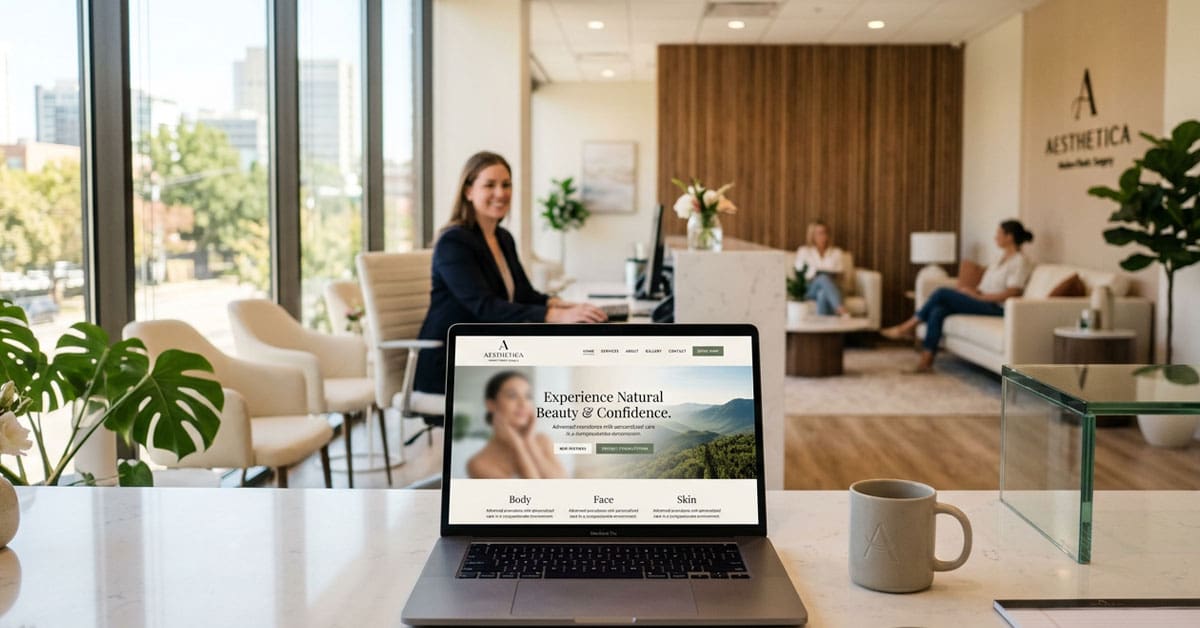
A woman in Tampa opens ChatGPT and types a simple question: “Who is the best tummy tuck surgeon near me?”
She books a consult with the first name on the list. You never knew she was looking.
Sound far-fetched? It is happening in practices across the country right now.
The good news is that you can fix it. LLM optimizations for plastic surgeons are how you get your name back on that list.
Here is what works, what doesn’t, and what to do this month.

LLM Optimizations for Plastic Surgeons Takeaways
- Patients now ask ChatGPT and Google AI which surgeon to see, not just Google search.
- Nearly half of patients have used AI tools to research a provider.
- LLM optimization helps AI tools find, trust, and cite your practice.
- Start by checking what AI says about your practice today.
- Answer-first procedure pages, schema, and consistent listings do the heavy lifting.
- Plastic surgery SEO is still the foundation. LLM optimization builds on it.
- AI chat tools can improve patient communication when your team reviews them.
- Track AI mentions and consult bookings, not just traffic.
What Is LLM Optimization for a Plastic Surgery Practice?
LLM optimization means shaping your online content so AI tools can understand it, trust it, and cite it. Those tools include ChatGPT, Gemini, Perplexity, and Google AI Overviews.
Think of it this way. Plastic surgery SEO gets you ranked. LLM optimization gets you recommended.
You may also hear it called AEO (answer engine optimization) or GEO (generative engine optimization). The names change, but the goal stays the same. When a patient asks AI who to see, LLM optimizations for plastic surgeons help put your practice in the answer.
Why Is LLM Optimization Important for Plastic Surgeons?
Patients changed how they shop for surgeons, and they did it fast.
A 2026 report from rater8 found that 47% of patients have used a tool like ChatGPT or Google’s AI Overviews to research a provider. Just nine months earlier, that number was 31%.
AI is also shaping final decisions. In their 2025 survey, 26% of patients said AI tools directly influenced their provider choice. That is close to primary care referrals at 28% and review sites at 29%.
Meanwhile, clicks from Google are shrinking. Ahrefs found that AI Overviews cut the click-through rate for the top-ranking page by 58%.
So ranking first is no longer the whole game. If AI answers before patients ever click, who is it naming? That question is why LLM optimizations for plastic surgeons matter right now.
Why Should Plastic Surgeons Consider LLM Optimization in Their Practices?
The trend is clear. But what do LLM optimizations for plastic surgeons mean for your bottom line?
Brands cited in AI Overviews earned 35% more organic clicks and 91% more paid clicks than brands that were not cited.
There is also an early-mover edge. Most local competitors have not started yet. That window won’t stay open long.
Here is my honest take, though. LLM optimization for plastic surgery practices does not replace plastic surgery SEO, reviews, or referrals. It builds on them.
A practice with a weak website and thin reviews won’t get cited either.
Our SEO case study shows how strong fundamentals pay off over time. LLM optimizations for plastic surgeons work best on top of that foundation.
How to Do LLM Optimization: A Step-by-Step Plan
Here is the playbook we use for LLM optimizations for plastic surgeons, in the order we use it.
Step 1: Audit What AI Says About You Now
Every plan for LLM optimizations for plastic surgeons starts here.
Ask ChatGPT, Gemini, Perplexity, and Google AI Mode ten to fifteen real patient questions. Try “Who is the best rhinoplasty surgeon in Tampa?” Note who gets named, which sources get cited, and whether your details are correct.
Step 2: Rebuild Procedure Pages Answer-First
Open each procedure page with a direct, two-sentence answer. Cover what it is, who it is for, recovery time, and cost range. Then add a short FAQ block at the bottom.
Step 3: Add Structured Data
Schema markup helps AI tools read your site correctly. Use Physician, MedicalProcedure, FAQPage, and LocalBusiness schema on the right pages.
Step 4: Make Your Details Match Everywhere
Your name, address, phone number, and credentials should match on every platform. Check Google Business Profile, RealSelf, Healthgrades, the ASPS Find a Surgeon directory, and your own site.
Step 5: Build Reviews and Mentions
AI tools lean heavily on what others say about you. The same report from earlier found that 75% of patients refuse to book with a provider rated below 4.0 stars.
Ask for reviews after every procedure and reply to them. Seek mentions in local media and podcasts too.
Step 6: Track and Repeat Monthly
Rerun your AI audit every month. Track AI mentions, AI-referred traffic in Google Analytics, and consult bookings. We use the same measure-and-adjust approach you can see in our medical device marketing case study.
What Are the Best Practices for LLM Optimization for Plastic Surgeons?
A few habits separate LLM optimizations for plastic surgeons that last from the ones that fade.
Lead with the Surgeon
Put board certification, years in practice, and procedure focus on every key page. AI tools look for proof of expertise, and so do patients.
Write the Way Patients Ask
Use full-question headings. “How long is recovery after a mommy makeover?” beats “Recovery” every time.
Make Every Section Stand Alone
AI tools quote pieces of a page, not the whole thing. Each section should make sense by itself.
Keep It Fresh and Accurate
Update pricing, technology, and dates at least twice a year. Never promise results.
Skip the Shortcuts
Be wary of anyone selling a “guaranteed ChatGPT ranking.” No one controls what AI says. The best LLM optimizations for plastic surgeons are steady and honest.
How Does LLM Optimization Enhance Communication Between Plastic Surgeons and Patients?
LLM optimization isn’t only about being found. The same tools can help your team talk with patients every day.
A website chat tool trained only on your approved content can answer after-hours questions and book consults.
Pre-consult emails can help patients arrive prepared. Post-op reminders and FAQs can cut routine calls to your front desk.
A West Health-Gallup survey found that about one in ten recent AI health users said AI gave advice they believed was unsafe. Your own vetted content is the fix.
Set clear guardrails. Have a person review every output.
Choose a HIPAA-compliant vendor that signs a business associate agreement. Never let the tool diagnose.
Done right, these LLM optimizations for plastic surgeons build trust before a patient ever walks in.
Start Small, Start This Month
Patients ask AI first now. Your practice needs to be part of the answer.
Start with one step this week. Run the fifteen-question AI audit and see what comes back. It is the simplest way to begin LLM optimizations for plastic surgeons.
Not sure what AI is saying about your practice? We are happy to take a look with you.
Book a call with our team whenever you’re ready.
LLM Optimizations for Plastic Surgeons FAQs
LLM optimization helps AI tools recommend your practice when patients ask who to see. It works alongside plastic surgery SEO, paid ads, and social media, not in place of them.
Strong SEO, reviews, and credentials feed what AI tools learn about you. LLM optimization shapes that information so AI can find it and cite it with confidence.
Track how often AI tools name your practice and how many consults come from AI-referred visits. Then compare those leads to the revenue they produce over six to twelve months.
In Google Analytics, segment traffic from chatgpt.com, perplexity.ai, and gemini.google.com. Add an AI option to the “How did you hear about us?” question on your intake form. Together, these give you a clear picture of what AI visibility is worth.
Start with one use case, like after-hours website chat, and expand once it works. Always keep a person in the loop.
Pick a vendor that signs a HIPAA business associate agreement. Train the tool only on your approved content. Review its answers weekly at first, then monthly once you trust it.