
Busy Reports Don’t Always Mean Real Results
Activity is easy to measure. Outcomes are much harder to fake.
Most agencies default to reporting on what’s simple to track. Impressions, page views, follower growth, click-through rates.
These numbers look good in a slide deck.
But they’re hard to tie to a booked rhinoplasty or a mommy makeover consultation.
The metrics that actually matter to your practice are different.
- Cost per consultation.
- Lead-to-booking conversion rate.
- Which channel drove the patient who just scheduled a procedure.
If your monthly report doesn’t answer those questions clearly, that’s worth a direct conversation with your team.
A strong plastic surgery marketing agency doesn’t just report activity. It reports outcomes. There’s a big difference.
The Activities That Look Good but Often Underperform
To be fair, not every agency is cutting corners on purpose. Some of these habits are industry-wide defaults. But default marketing doesn’t grow practices.
Social Media Posting Without a Strategy
Consistent posting has value. Brand visibility matters in this space. But posting three times a week without a clear patient acquisition goal is just filling a feed.
Social content for plastic surgeons should do more than look polished.
It should educate, build trust, and move the right patients toward a consultation.
If your agency can’t explain how your Instagram content connects to actual patient inquiries, that’s a gap worth addressing.
Generic SEO That Ignores Local Intent
Ranking for “breast augmentation” nationally sounds impressive. But your patients are searching in your city, your zip code, your neighborhood.
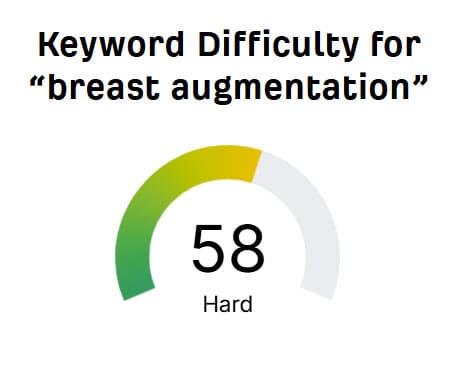
A broad plastic surgery SEO keyword example
Local SEO is where most plastic surgery practices win or lose the search game. That means optimizing your Google Business Profile, building location-specific content, and earning reviews that signal trust to both patients and Google.
A plastic surgery marketing agency running generic SEO work won’t move that needle.
Paid Ads Running Without Conversion Tracking
Paid advertising works when you know what happens after someone clicks.
If your agency is running Google or Meta ads without clear conversion tracking tied to form fills or call bookings, you’re spending blind.
According to a 2024 benchmark report from WordStream, the average cost per lead in healthcare runs significantly higher than most other industries.
Every untracked dollar is a missed chance to optimize.
What Your Agency Should Be Focused On Instead
The best plastic surgery marketing agency relationships don’t feel like vendor contracts. They feel like growth partnerships.
Here’s what that looks like in practice.
- Your agency knows your average case value and which procedures have the highest margin.
- They build campaigns around those specific goals, not just general brand awareness.
- They track patient acquisition costs by channel and report it without you having to ask.
- They treat your Google Business Profile as seriously as your paid ads.
- They build content that answers the real questions your patients are already searching.
- And they bring you insights, not just updates.
Our work with aesthetic and medical practices shows what’s possible when strategy and execution are tied directly to patient acquisition goals.
The Questions Every Plastic Surgeon Should Be Asking Their Agency
You don’t need a marketing background to hold your agency accountable. You just need the right questions.
Ask them:
- What is our current cost per consultation?
- Which channel is driving our most qualified leads right now?
- What did we test last month, and what did we learn from it?
These aren’t gotcha questions. They’re the baseline of any healthy agency relationship.
A good agency will have clear answers ready. A great one will have already been asking these questions on your behalf. According to the American Society of Plastic Surgeons, patient acquisition and digital visibility remain top business priorities for practices heading into 2025.
If your agency isn’t aligned with those priorities, it’s worth finding out why.
When “Busy” Is Actually a Red Flag
There’s a difference between an agency working hard and one working strategically. The distinction matters.
Activity-padding shows up in predictable ways. Long reports with lots of data but no clear narrative. Monthly calls that recap what happened but never discuss what’s changing. The same strategy quarter after quarter with no meaningful adjustments. These are patterns worth paying attention to.
Transparency is the foundation of a good agency partnership. You should always know where your budget is going and why.
A plastic surgery marketing agency that’s genuinely invested in your growth will proactively share what’s working, what isn’t, and what comes next. If that’s not the conversation you’re having, it’s fair to expect more. Learn more about what a results-focused partnership looks like.
Conclusion
Busyness without direction is just expensive noise. Your marketing should be working as hard as you are.
The good news is that raising the standard isn’t complicated. Ask better questions. Expect clearer reporting. Demand a strategy that connects directly to your actual business goals.
If you’re not sure where to start or want an honest second opinion on what your current marketing is actually doing, we’re happy to take a look. No pitch, just a real conversation. Reach out to the team at Neur Digital anytime.