
A surgeon had a beautiful website, sharp before-and-after galleries, warm bio photos and five-star reviews scattered across every page.
Traffic was climbing every month. Bookings were not.
Patients landed on the homepage, scrolled for a while, then left.
No call. No form. No consultation request. Just bounced.
The problem wasn’t the practice. It wasn’t the surgeon’s skill either. It was the website. Nobody had done any real plastic surgery web optimizations to turn visitors into booked patients.
This happens more often than you’d think. Plastic surgery web optimizations get treated as a design afterthought instead of a growth strategy. That mistake costs practices real revenue every month.
But, plastic surgery web optimizations doesn’t require a full rebuild. Most practices just need to fix the handful of things quietly turning visitors away.
Let’s fix that, starting with what optimization actually means.
Plastic Surgery Web Optimizations Takeaways
- Plastic surgery web optimizations means removing friction, not adding more pages or photos.
- Mobile makes up 76% of plastic surgery website visits, so mobile-first design isn’t optional.
- Slow load times cause 56% of visitors to abandon a site before it even loads.
- Dedicated procedure landing pages convert better than sending all traffic to your homepage.
- Simple forms with fewer fields keep more patients from quitting halfway through.
- Trust signals, testimonials, and repeated CTAs should live above the fold and near decision points.
- Social media builds pre-visit trust, but only 15% of surgeons post daily despite high patient engagement.
- Optimizations are ongoing. Review load speed, forms, and drop-off points every quarter.
What Does It Mean to Optimize a Plastic Surgery Website?
Plastic surgery web optimization means aligning your design, speed, and content so visitors take action. Not just look around.
It’s not about adding more pages or prettier photos. It’s about removing friction between a curious visitor and a booked consultation.
Here’s the part most practices miss. Most of your traffic isn’t browsing on a desktop anymore.
Mobile devices account for 76% of plastic surgery website visits, while desktop trails at 22%.
If your site loads slowly or looks cramped on a phone, you’re losing patients before they read a single word.
Real website optimization for a plastic surgery practice starts with mobile. Everything else builds from there.
How Can a Plastic Surgery Website Optimize Its Conversion Rate for Appointment Bookings?
Conversion rate optimization comes down to reducing friction at every step.
Start with speed.
56% of visitors abandon a plastic surgery website that takes more than five seconds to load. That’s over half your paid traffic gone before the page even renders.
Next, look at where your calls to action live.
If “Book a Consultation” is buried in a dropdown menu, you’re asking patients to work for it.
Put it above the fold. Repeat it as they scroll.
Send traffic to the right page too.
A homepage can’t answer a specific question the way a procedure page can. Dedicated landing pages consistently outperform general pages for conversion.
If someone searches “rhinoplasty consultation,” send them straight to that page, not your homepage.
Finally, simplify your forms.
Every extra field is a reason to quit halfway through. Ask for a name, phone number, and procedure of interest. Save the rest for the actual consultation.
This is the heart of plastic surgery web optimization for conversions.
Fewer steps, clearer paths, faster pages.
Practices often assume more traffic solves the problem. It doesn’t. Website optimization for plastic surgery practices matters more than traffic volume once you’re already getting visitors. A thousand visitors who bounce in five seconds convert worse than two hundred who actually reach your form.
We cover more of this in our post on digital marketing for plastic surgeons, where UX and storytelling work together to drive bookings.
How to Design a Plastic Surgery Website for High Conversions?
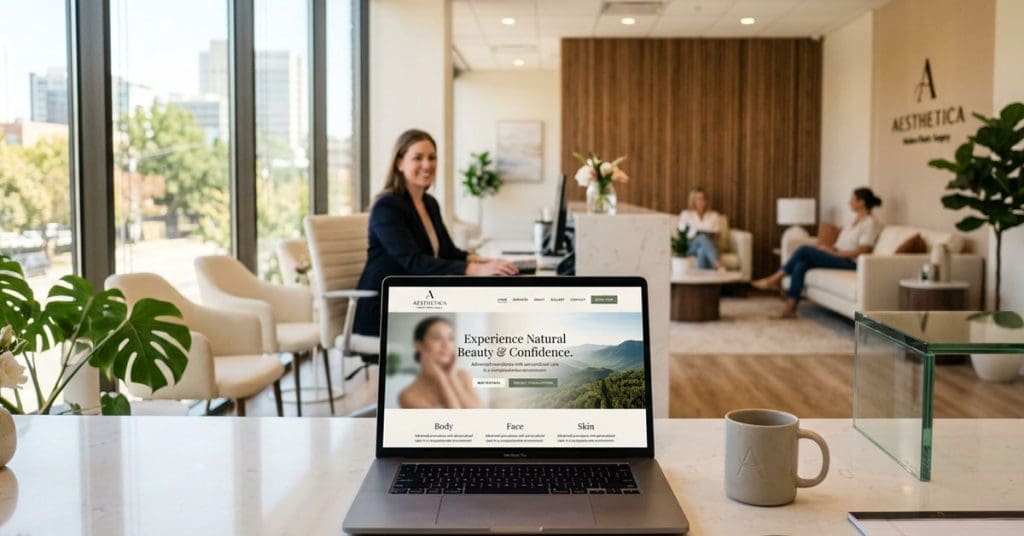
Good design isn’t about looking impressive. It’s about making the next step obvious. Plastic surgery website design should serve the patient’s decision, not just the practice’s aesthetic. Design is really just plastic surgery web optimization applied visually.
A high-converting plastic surgery website design usually includes:
- Mobile-first layout: built for the 76% of visitors on a phone, not shrunk down from desktop
- Fast-loading galleries: compressed before-and-after images that don’t stall the page
- Trust signals above the fold: board certifications, awards, and years in practice
- A repeated booking CTA: visible in the header, mid-page, and footer
- Clear procedure navigation: grouped by category, not buried in a mega-menu
- Testimonials near decision points: placed right before the CTA, not tucked on a separate page
Our team walks through this in more depth in Plastic Surgery SEO That Fills Your Consultation Calendar, where design and search visibility work together.
How Does Social Media Presence Affect Plastic Surgery Website Conversions?
Patients don’t decide to book the moment they land on your site. Most have already been shaped by what they saw on Instagram or TikTok first.
Social media builds the trust your website later needs to convert. And the opportunity is bigger than most practices realize.
70% of millennials engage with social media multiple times a day, but only 15% of surgeons post daily.
That gap is where competitors win patients before you even get a click.
The fix isn’t posting more randomly. It’s connecting social content directly to your plastic surgery web optimization strategy. Link your bio and posts to specific procedure pages, not your homepage.
Someone who just watched a rhinoplasty video wants rhinoplasty information next, not a generic landing page.
We break this down further in Social Media for Plastic Surgeons: Followers Into Patients.
Optimization Is Ongoing, Not One and Done
Plastic surgery web optimization isn’t a project you finish once. Patient behavior shifts. Page speed standards get stricter. Competitors update their sites too.
Treat your website like your practice.
Check on it regularly. Fix what’s slowing patients down. Test new calls to action when bookings stall.
A quarterly review is a reasonable cadence for most practices. Look at load speed, form completions, and where visitors drop off. That habit alone keeps plastic surgery web optimization from becoming an annual scramble.
If your plastic surgery website for conversions needs a second look, that’s exactly the kind of work we do.
See how we’ve approached this for other practices in our SEO case study.
Plastic Surgery Web Optimizations FAQs
Look for an agency with specific plastic surgery or healthcare marketing experience, not a generalist shop. Neur Digital specializes in plastic surgery SEO, website design, and content strategy built around patient conversion.
Most practices see measurable changes in form completions and bounce rate within four to eight weeks of implementing fixes. Full SEO and organic traffic gains typically take three to six months to stabilize, since search rankings build over time.
A blog helps with search visibility, but it won’t fix a slow, confusing site on its own. Get the core experience right first: speed, mobile design, and clear CTAs. Then use content to bring in more of the right traffic to convert.