Why SEO in Healthcare Matters More Than Rankings
People searching for healthcare services are often in a different headspace than someone looking for recipes or product reviews.
Healthcare searches are high-intent, frequently local, and often categorized as YMYL (Your Money or Your Life). This means Google holds these pages to higher standards for trust and accuracy.
Ranking well can directly affect patient acquisition, revenue, and even community health outcomes.
So, when we talk about SEO in healthcare, we’re not only thinking about organic rankings. We’re thinking about:
- Attracting people who will call or book
- Converting visitors into consultations or appointments
- Building long-term trust and reputation online
- Protecting patient privacy and meeting compliance standards
Understand the Patient Search Journey
Before you optimize anything, map the patient journey. We like to break it into three phases:
- Awareness: Someone notices a problem or desire. “Why do I have nasal swelling?” or “How to reduce forehead wrinkles.”
- Consideration: They research options. “non-surgical rhinoplasty vs surgical” or “best medspa for dermal fillers near me.”
- Decision: They look for providers. “rhinoplasty surgeon [city]” or “med spas near me.”
Your content and healthcare SEO should match each phase.
Educational blog posts attract awareness-stage searchers.
Comparative guides and FAQ pages serve consideration.
Location pages, service pages, and strong local SEO capture decision-stage patients.
Search Intent Examples
- Informational: “What is a chemical peel?” Use this for a blog post.
- Transactional: “Book Botox near me” Optimize service and local SEO pages.
- Commercial: “Best breast augmentation surgeon” Show credentials and before/after galleries.
Technical SEO Essentials for Healthcare Sites
Technical SEO in healthcare is the foundation of your website. If Google can’t crawl, index, or serve your pages quickly and securely, the best content won’t help.
Site Architecture and URL Strategy
- Organize content logically: Home → Services → Service Category → Specific Procedure.
- Use clean, descriptive URLs: /services/rhinoplasty/closed-rhinoplasty rather than a long ID string.
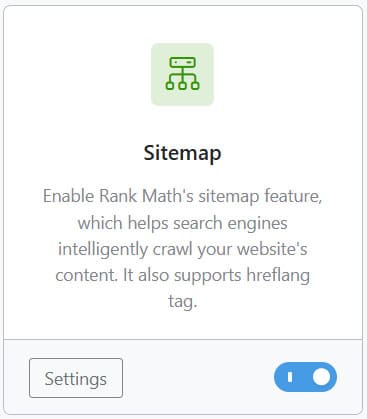
- Implement an XML sitemap and submit it to Google Search Console. Many WordPress SEO plugins have an XML sitemap built in. All you have to do is check the button to use it.

Sitemap settings example for SEO in healthcare.
Mobile-First and Page Speed
Most patients search on mobile. We prioritize a mobile-first site and aim for fast load times by:
- Optimizing images to load as quick as possible
- Enabling browser caching and compression
- Minimizing third-party scripts (booking widgets, chat widgets)
- Using a reliable website hosting and CDN
Schema Markup for Healthcare
Structured data helps search engines and AI understand your content. Adding schema to your pages can lead to results like getting cited in AI and knowledge panels mentions. For SEO in healthcare, implement schema for:
- Medical Organization or Physician
- Local Business with address, hours, and geo-coordinates
- Service for specific procedures
- FAQ Page for common patient questions
Here’s a sample JSON-LD schema example for a plastic surgery clinic:
On-Page Content Strategies That Convert
Healthcare content marketing needs to be accurate, empathetic, and patient-focused. We like to think of it as “help first, sell second.” When you educate patients well, trust grows and conversions follow.
Write for Humans and Search Engines
- Address common questions directly. Use headings as patient prompts.
- Keep medical jargon clear. When you use technical terms, define them (e.g., rhinoplasty = surgical reshaping of the nose).
- Include clear calls to action like book a consult, request pricing, view before & afters.
Service Pages: Convert Decision-Stage Traffic
High-performing service pages include:
- Strong H1 that matches search intent: “Rhinoplasty Surgeon in [City]”
- Unique value propositions: board certification, years of experience, outcomes
- Before/after galleries and patient stories (make sure you have their consent)
- Transparent pricing or financing options when appropriate
- Structured FAQs and schema
Content That Captures Awareness and Build Authority
Blog posts and videos can answer long-tail questions like “how long does filler last?” or “risks of eyelid surgery.”
These pages are great for internal linking to service pages and for speaking to different stages of the patient journey.
Localize Your Content
Include local references like the neighborhoods you serve and commonly searched variants like “near me” or specific city names.
This helps you appear in local packs and map searches.
Local SEO and Google Business Profile
For most clinics and medspas, local search is the primary source of new patient leads.
Optimizing your Google Business Profile is one of the highest-impact activities you can do.
- Optimize Your Google Business Profile
Claim and verify your GBP listing - Use the correct category (e.g., “Medical Spa”, “Plastic Surgeon”)
- Write a concise business description with services and city names
- Keep NAP (name, address, phone) consistent across your site and directories
- Post updates and offers regularly. GBP posts improve engagement
Local Citations and Directory Listings
High-quality local directories and health-specific listings like Healthgrades, Zocdoc, Vitals can help with visibility and trust.
Be sure to clean up duplicate listings.
Local Content Ideas
- “Best medspa in [neighborhood]” landing pages
- Local patient stories and case studies (with permission)
- Community event sponsorships and news posts
Reputation Management: Reviews and Patient Trust
When we meet with clinics, improving reviews is always on the roadmap. Reviews are social proof and a local ranking factor.
Get More Reviews Ethically
- Ask for reviews after positive interactions (post-op check, successful consult)
- Make it easy and send a direct link to your Google review page
- Train staff to request reviews naturally.
Respond to Reviews
Responding shows you value feedback.
For positive reviews, thank the patient. For negative feedback, apologize, offer a way to resolve offline, and be factual.
Never disclose protected health information publicly.
Link Building and Digital PR for Healthcare
Links still matter. But in healthcare, you need authoritative, relevant links to boost credibility and rankings.
White-Hat Link Tactics That Work
- Digital PR earns mentions from local news or healthcare trade publications.
- Resource pages with high-quality posts that local clinics, forums, or educational sites can reference
- Partnerships with local sponsors or partner with charities.
- Write guest contributions for relevant sites (medical associations, local business blogs)
At Neur Digital, we often pair technical audits with targeted PR to build both visibility and authority for healthcare clients.
A well-timed local story can produce a spike in traffic and a handful of high-quality links.
Measure What Matters: KPIs for Healthcare SEO
SEO in healthcare isn’t just traffic. It’s more about conversions and patient acquisition. Track metrics that align with business goals.
Key Performance Indicators
- Organic traffic
- Keyword rankings for high-intent phrases
- Conversions: calls, contact form submissions, appointment bookings
- Click-through rate from search results
- Local pack visibility and GBP actions (calls, directions, website clicks)
- Bounce rate on service pages
Use tools like Google Analytics, Google Search Console, and call-tracking software.
We recommend setting up conversion goals and tagging campaigns so you can see exactly which pages and keywords drive booked appointments.
Compliance, Privacy, and Trust Signals
Healthcare sites are held to higher standards for user trust. Here’s how we ensure compliance while staying SEO-friendly:
- Use secure forms and, if applicable, HIPAA-compliant form processors
- Include clear privacy policy and terms of service pages
- Display clinician credentials, board certifications, and transparent bios
- Use patient consent for photos, testimonials, and case studies
- Keep medical content accurate and cite credible sources
Google looks for EEAT signals. Strong clinician bios, published research, and verified credentials help satisfy those signals.
Common Pitfalls and How to Avoid Them
Over the years we’ve seen the same mistakes repeat. Avoid these traps:
- Thin or duplicate content: Avoid manufacturer content or stock descriptions. Write original, patient-focused content.
- Ignoring mobile: Slow mobile pages kill conversions.
- Over-optimizing for keywords: Keyword stuffing or creating doorway pages can harm your site. We’ve recently seen LinkedIn posts where AI recommends bad SEO tactics, like keyword stuffing with hidden text. Pro tip, don’t do this.
- Neglecting local signals: If you serve local patients, you can’t ignore GBP, citations, and reviews.
- Not measuring ROI: Don’t guess, track everything.
A Practical 90-Day SEO Plan for Healthcare Providers
If you’re starting from scratch or re-prioritizing, here’s a hands-on 90-day healthcare marketing plan to create momentum.
Week 1–2: Audit & Quick Wins
- Run a technical audit (crawl, indexability,
- mobile issues, site speed)
- Fix critical issues: HTTPS, robots.txt, sitemap
- Claim and optimize Google Business Profile
Week 3–6: Local & On-Page Optimization
- Optimize top service pages with updated H1s, meta titles, descriptions, and schema
- Create or refine location pages for each clinic
- Start a review capture program
Week 7–10: Content & Authority
- Publish 4–6 high-value content pieces (blogs, video explainers)
- Pitch one local PR story or partnership
- Begin targeted link outreach to medical and local sites
Week 11–12: Measure, Iterate, and Plan Next Quarter
- Review analytics and conversion data
- Double down on pages and keywords that perform
- Write 3 FAQs for each service page
How We Approach SEO for Healthcare Clients (Neur Digital’s Perspective)
At Neur, we frame SEO as a patient acquisition channel that must marry strong technical foundations with content and produce measurable outcomes. Our approach combines:
- Comprehensive technical audits to remove roadblocks
- Patient-first content that answers real questions and builds trust
- Local SEO for medical professionals that increase visibility where it matters
- Digital PR and outreach to earn reputable links and mentions
- Ongoing testing and analytics to optimize conversion paths
We typically start with a discovery call to understand your business goals. Whether that goal is to increase consultations or launching a new device, the call sheds a ton of light.
Then we build a tailored roadmap. If you want specifics, we’re happy to walk through a sample audit and prioritized task list.
Final Thoughts
SEO in healthcare is both challenging and rewarding.
It requires technical discipline, empathetic content, local focus, and an unwavering commitment to patient privacy and trust.
If you approach it methodically and prioritize your patients, you’ll see a reliable channel for patient acquisition.
If you want a starter checklist, here’s a condensed version you can use right now:
- Claim and optimize your Google Business Profile
- Ensure a fast mobile experience
- Publish clear, authoritative clinician bios
- Optimize service pages for high-intent keywords and add schema
- Start a consistent review solicitation and response process
- Track calls and bookings to measure ROI
If you’d like help executing any of these steps, Neur Digital specializes in SEO for healthcare, plastic surgery, medical device, and medspa clients.
We focus on strategies that boost visibility and convert patients.
Reach out for a strategy call and we’ll walk through a plan tailored to your practice.