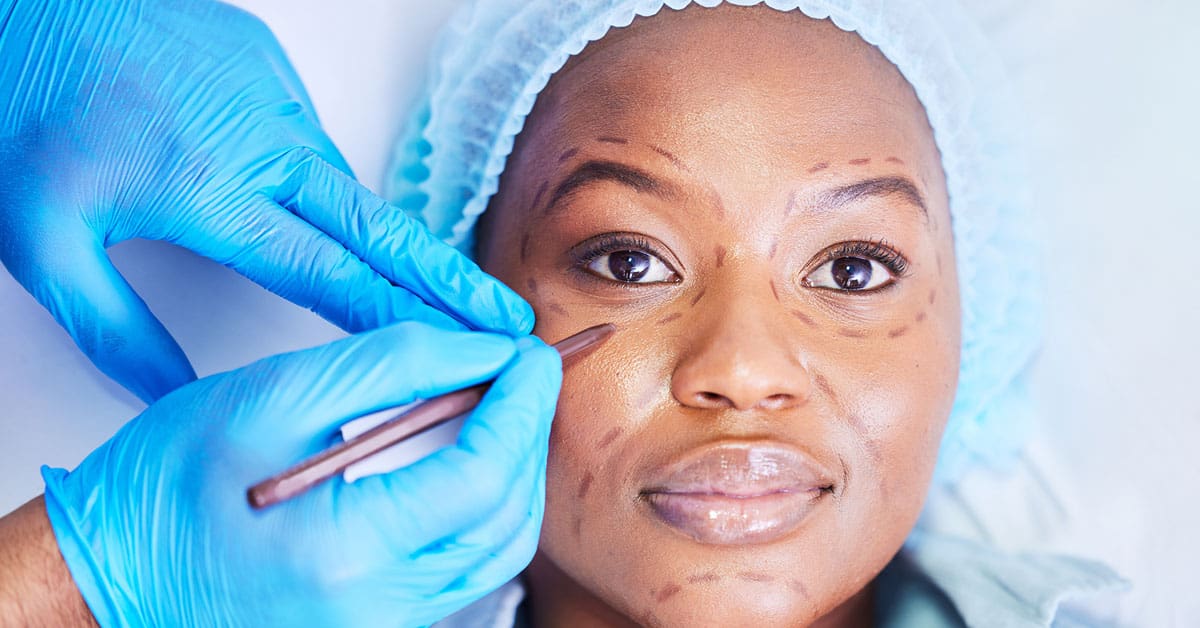
A prospective patient sits on her couch, thinking about a mommy makeover. She doesn’t open Google. She opens ChatGPT and types “Best clinics for mommy makeover surgery near me.”
Within seconds, she has a list of names, links, and content. None of them may be you.
This is the new reality for plastic surgery marketing.
Patients are asking AI tools directly, and those tools are already deciding who gets mentioned.
That shift has a name: generative engine optimization for plastic surgery and practices need to understand now, not later.
This article breaks down what generative engine optimization actually is, how to create content for it, and who can help you get started.

Generative Engine Optimization for Plastic Surgery Key Takeaways
- Patients now ask AI tools like ChatGPT directly instead of only searching Google
- Generative engine optimization for plastic surgery focuses on getting cited in AI answers, not just ranked in blue links
- Traditional SEO is still the foundation, GEO builds on top of it
- Clear, self-contained, Q&A-style content gets pulled into AI answers more often
- A licensed provider should always review AI-drafted medical content before it publishes
- Few agencies specialize in plastic surgery GEO services today, Neur Digital is one of them
- Practices that start early build a head start competitors will struggle to close
How can generative AI improve SEO strategies for plastic surgery clinics?
Traditional SEO gets your practice ranked on a results page. Generative engine optimization gets your practice cited inside an AI-generated answer. Those are two different games.
When a patient asks ChatGPT or Perplexity about facelift recovery, the AI doesn’t hand back ten blue links. It writes a summary and names a handful of sources. GEO for plastic surgeons is about becoming one of those named sources.
Here’s what that requires:
- Structured content. AI models pull information more easily from clearly organized pages with headers, lists, and direct answers.
- Technical SEO fundamentals. Site speed, schema markup, and site authority still matter. GEO builds on top of SEO. It doesn’t replace it.
- Trust signals. Board certifications, real patient reviews, and before-and-after galleries influence AI citations the same way they influence human patients.
- Fresh, consistent publishing. AI tools favor sources that update regularly and stay current on procedures and pricing.
The shift is already measurable.
Traditional organic search still drives roughly 63% of website traffic in 2026, but the remaining 37% now starts with AI instead of Google, according to Neur Digital’s plastic surgery SEO research. That gap will only widen.
Healthcare content faces an added wrinkle. Only 37.9% of URLs cited in AI Overviews actually rank in the top 10 organic results, according to Ahrefs data reported by BiziQ in late 2025.
Ranking well and getting cited by AI are related, but they aren’t the same job anymore.
Consumer behavior backs this up. Half of consumers now use AI-powered search, according to HubSpot’s 2026 State of Marketing report cited by Erlin. That’s not a niche habit anymore. It’s mainstream.
If your practice has invested in plastic surgery SEO, you already have a foundation. GEO is the next layer to build on it.
How to use generative AI to create SEO content for plastic surgery websites?
Generative AI can speed up content creation. It should never replace medical judgment.
Here’s how the two work together well.
Start with real patient questions.
Use AI to draft answers to what patients actually ask, like “how much does a rhinoplasty cost in Chicago” or “how long is recovery after a tummy tuck.”
Direct questions make direct, citable answers.
Write in a Q&A format.
AI search engines extract information more easily when a question is followed immediately by a clear, complete answer.
Save the nuance and caveats for the sentences after.
Keep every section self-contained.
Each header and its content should make sense pulled out of context. That’s exactly how an AI model will use it, and it also makes the section easier to repurpose for social media.
Mine AI conversations for content gaps.
Ask what patients are asking AI tools about your specialty. Those questions are often missing from your website entirely.
Always add human review.
A licensed provider should check every AI-drafted paragraph for medical accuracy before it goes live.
This isn’t optional.
Google and AI models both weigh expertise and trustworthiness heavily for health content.
Link internally to reinforce authority.
Connect new content to procedure pages, case studies, and existing GEO or SEO resources on your site.
This helps both traditional crawlers and AI models understand how your content fits together, a strategy outlined in Neur Digital’s strategies for plastic surgery digital marketing.
This approach isn’t about publishing more content. It’s about publishing content AI models can actually use.
Which companies offer generative engine optimization services for plastic surgery practices?
GEO is still a young service category. Most digital marketing agencies are only beginning to understand it, and even fewer specialize in healthcare.
Neur Digital offers plastic surgery GEO services built specifically for aesthetic and healthcare practices.
That specialization matters.
Plastic surgery content carries strict accuracy and trust requirements that generic marketing agencies often miss.
Neur Digital’s approach pairs GEO with proven SEO fundamentals, the same combination documented in the agency’s medical device marketing case study.
The goal isn’t just visibility. It’s getting your practice named when a patient asks an AI tool who to trust.
If you’re not sure where your practice currently stands in AI search results, that’s worth finding out before a competitor does.
The bottom line
AI search isn’t a future trend for plastic surgery marketing. It’s already reshaping how patients find surgeons today.
Practices that adapt now, with strong content and the right GEO for plastic surgery strategy, will be the ones AI tools recommend next year.
Practices that wait will be playing catch-up.
Have questions about where your practice stands?
Reach out to Neur Digital to talk through your options, no pressure, just a conversation about what’s working and what isn’t.
Generative Engine Optimization for Plastic Surgery FAQs
It’s the practice of structuring a plastic surgery website’s content so AI tools like ChatGPT and Google AI Overviews cite it in their answers. It builds on traditional SEO but focuses on being quoted, not just ranked.
Traditional SEO aims to rank your site on a results page. GEO aims to get your practice named directly inside an AI-generated answer. They share a technical foundation but require different content strategies.
Practices don’t need to overhaul everything overnight, but waiting has a real cost. AI search already accounts for a meaningful share of patient research, and early movers are the ones AI models learn to trust first.